Seniors Housing Market Update + New Team Member

Seniors Housing Market Update + New Team Member
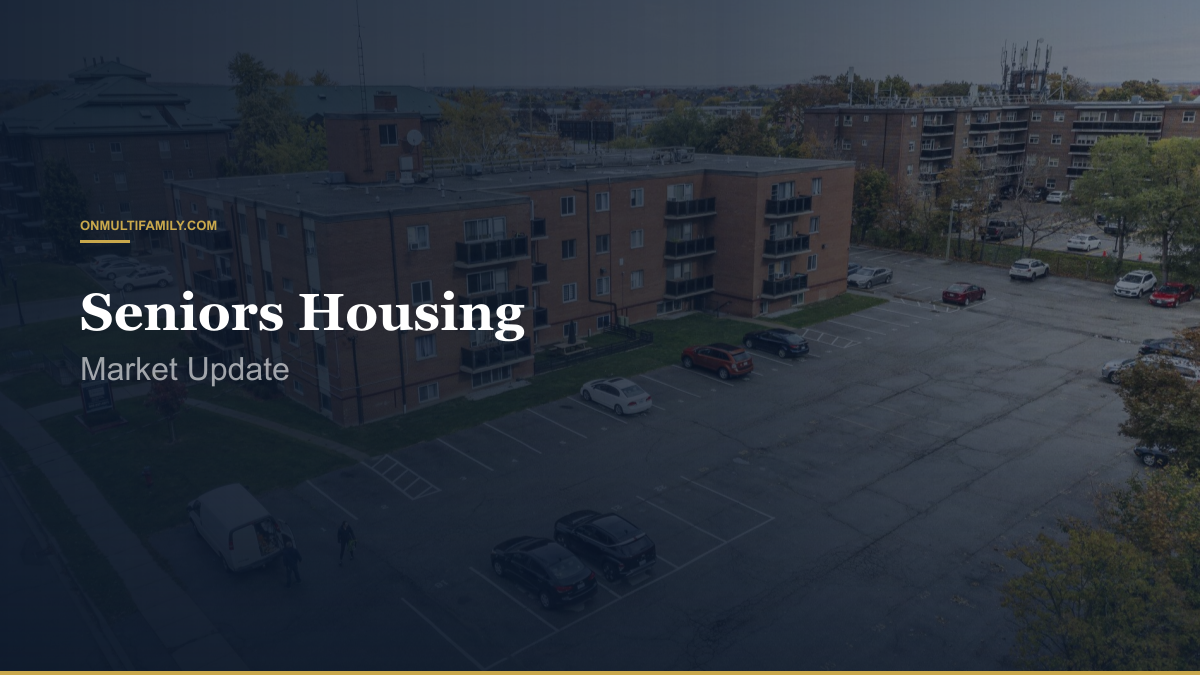
Seniors Housing Market Update
For the first time since pre-COVID, seniors housing fundamentals are all moving in the right direction at the same time.
Demographics are accelerating. In 2025, average occupancies are above 90 percent, driven by non-discretionary demand.
Supply remains constrained. Older home closures continue, and new construction has slowed.
Capital is re-entering the conversation. Private and institutional groups are underwriting again. As highlighted on Q4 earnings calls, the largest public senior housing operators continue to focus on growth in 2026, supported by unwavering demand. Key players continue to place their sights on strategic acquisition in key submarkets, supported by an expectation of multi-year growth of a conservative 4.0% per annum.
From a macro perspective, the 75+ population cohort is expected to grow more than 40 percent over the next decade. More specifically, the number of Canadians over the age of 85 is projected to double by 2036, reaching approximately 1.6 million people. This comes at a time when government-funded long-term care home waitlists remain significantly stretched, with Ontario alone reporting more than 50,000 individuals waiting for placement.
At the same time, development starts declined sharply through 2023 and 2024 as construction costs and financing conditions stalled new projects. In many Ontario markets, replacement cost remains well above where existing assets are trading.
Occupancy across stabilized retirement products has improved. Large operators have reported occupancy of approximately 95% with stabilized margins achieving the low to mid 40% range. Lenders are engaging again, selectively.
Five Practical Implications
1. Strong operators with stabilized assets are regaining pricing power, particularly in supply-constrained submarkets. Focused on strategic growth in specific geographic locations.
2. Heavily levered or underperforming properties are becoming recapitalization candidates.
3. Buyers are underwriting operations first and real estate second.
4. Expenses are being monitored and controlled, and post-COVID labour shortages are easing. Temporary agency costs have seen a drop by greater than 50% over the past year.
5. Growing competition means offering high quality service and facilities is equally as important as location.
Seniors housing is not conventional multifamily. Revenues and expenses are driven by different care levels, staffing models, and service mixes. Expense control determines value. Financing structure can make or break a transaction.
New Team Member: Aman Rana
To deepen our coverage in this space, Aman Rana has joined our team to help lead our seniors housing platform.
Aman spent the past decade in real estate credit, most recently as Associate Director of Credit at Timbercreek. His experience underwriting complex transactions across Canada and the U.S. brings a capital markets lens to an asset class where structure matters as much as pricing.
Our objective is straightforward: provide owners and investors with clear, data-driven insight into their portfolios, how lenders are underwriting, and what strategic options are available in this cycle for both acquisitions and dispositions.
If you would like to receive dedicated seniors housing updates, including market data, new listings, and off-market opportunities, reach out to Aman directly:
Aman Rana | 647-971-8384 | aman.rana@colliers.com
Get analysis like this delivered every week.
Join 14,000+ multifamily professionals staying ahead of Ontario market trends.